

Business Operation · 2025
In this section22 topics
- Corporate Information4 items
- Dividend Policy2 items
- Major Shareholders3 items
- Business Strategies Overview7 items
- Material Changes & Developments1 item
- Use of Proceeds from Securities Offerings1 item
- Commitments Made in the Registration Statement1 item
- Group Operating-Structure Policy1 item
- Companies Where the Company Holds ≥10%1 item
- Shareholders with Potential Conflict of Interest1 item
- Relationships Among Major Shareholders2 items
- Shareholders' Agreement1 item
- Shareholding Diagram (Group Structure)2 items
- Income Structure4 items
- Product / Service Characteristics2 items
- Research & Development6 items
- Assets Used in the Business6 items
- Marketing Policy & Competition3 items
- Procurement of Products & Services8 items
- Projects Under Construction1 item
- Debentures & Bills of Exchange1 item
- Convertible Securities1 item
Corporate Information
Company Name
LEE FEED MILL PUBLIC COMPANY LIMITED
Telephone
0-2632-7300
Website
www.leepattana.com
ir@leepattana.com
Dividend Policy
Dividend Policy
The Company has a policy to pay dividends to shareholders at a rate of not less than 50% of the net profit of the Company’s separate financial statements after deducting all types of reserves as required by law and the Company. However, such dividend payments are subject to change depending on operational performance, financial position, future projects of the Company, and overall economic conditions.
On February 24, 2026, the Board of Directors' meeting passed a resolution to propose for approval at the Annual General Meeting of Shareholders a dividend payment for the year 2025 at the rate of 0.20 Baht per share. This represents a dividend payout ratio of 70% of the net profit according to the Company’s separate financial statements (or 68% of the consolidated financial statements attributable to equity holders of the Company). The allocation of sources is designed to maximize tax benefits for shareholders as follows:
Allocation from profits of businesses subject to corporate income tax at the rate of 20% of net profit, at the rate of 0.08 Baht per share.
Allocation from profits of businesses granted investment promotion (BOI) which are exempt from corporate income tax, at the rate of 0.12 Baht per share.
Historical Dividend Payments
| This Year | Last Year | 2 Years Ago | 3 Years Ago | 4 Years Ago | Metric | Description |
|---|---|---|---|---|---|---|
| 0.29 | 0.16 | 0.09 | 0.03 | 0.15 | Net profit per share (Baht : Share) | Net profit per share (baht : share) |
| 0.2 | 0.12 | 0.09 | 0.03 | 0.13 | Dividend per share (Baht : Share) | Dividend per share (baht : share) |
| 0 | 0 | 0 | 0 | 0 | Dividend stock ratio (Number of original shares: dividend shares) | Ratio of stock dividend payment (existing share : stock dividend) |
| 0 | 0 | 0 | 0 | 0 | Dividend share value per share (Baht : Share) | Value of stock dividend per share (baht : share) |
| 0.2 | 0.12 | 0.09 | 0.03 | 0.13 | Total dividend payment value (Baht : Share) | Total dividend payment (baht : share) |
| 70 | 76 | 85 | 32 | 88 | Dividend payout ratio to net profit (%) | Dividend payout ratio compared to net profit (%) |
Business Strategies Overview
Introduction
The Lee Pattana Group has announced its vision, mission, main objectives, and strategies to ensure that all employees within the organization are informed and share a common understanding in driving the organization towards sustainable business success.
Chairman's Message
Vision
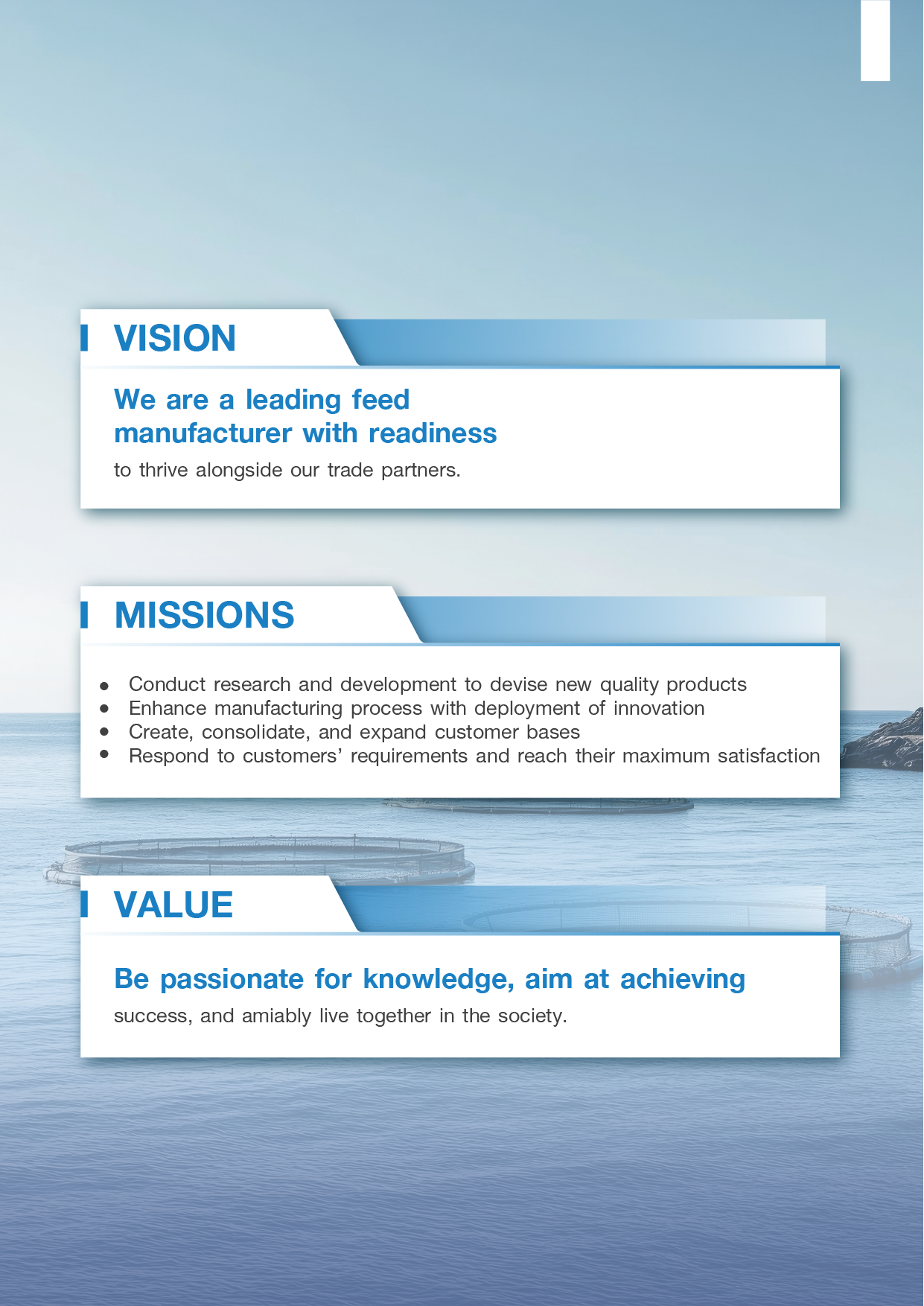
Objectives
The Lee Pattana Group operates in the production and sale of finished animal feed, striving to develop product quality to meet standards, adhering to good governance practices that are transparent and accountable, while also considering the environment and maintaining social responsibility.
Goals
Quality and standard development to achieve sustainability
Business Strategies
The Lee Pattana Group is committed to sustainable growth through SWOT analysis and corporate strategy evaluation. The Group continuously refines its operational approach annually to align with the evolving business environment. Our core strategy is structured around four key initiatives:
1. Research and Development (R&D) – Focuses on developing and delivering high-quality products that meet customer needs and maximize satisfaction.
2. Key Feeder – Aims to enhance product quality by utilizing insights from the application of animal feed in farms to refine and improve our offerings.
3. Cost Driver Review – Seeks to optimize cost efficiency while maintaining the Group’s competitive edge in the market.
4. Sales Force Blueprint – Establishes a clear sales strategy to enhance operational effectiveness and drive business growth.
These strategies are designed to ensure the Group’s long-term stability and strengthen its competitive advantage in the industry.
Other Information
| Name | Description |
|---|---|
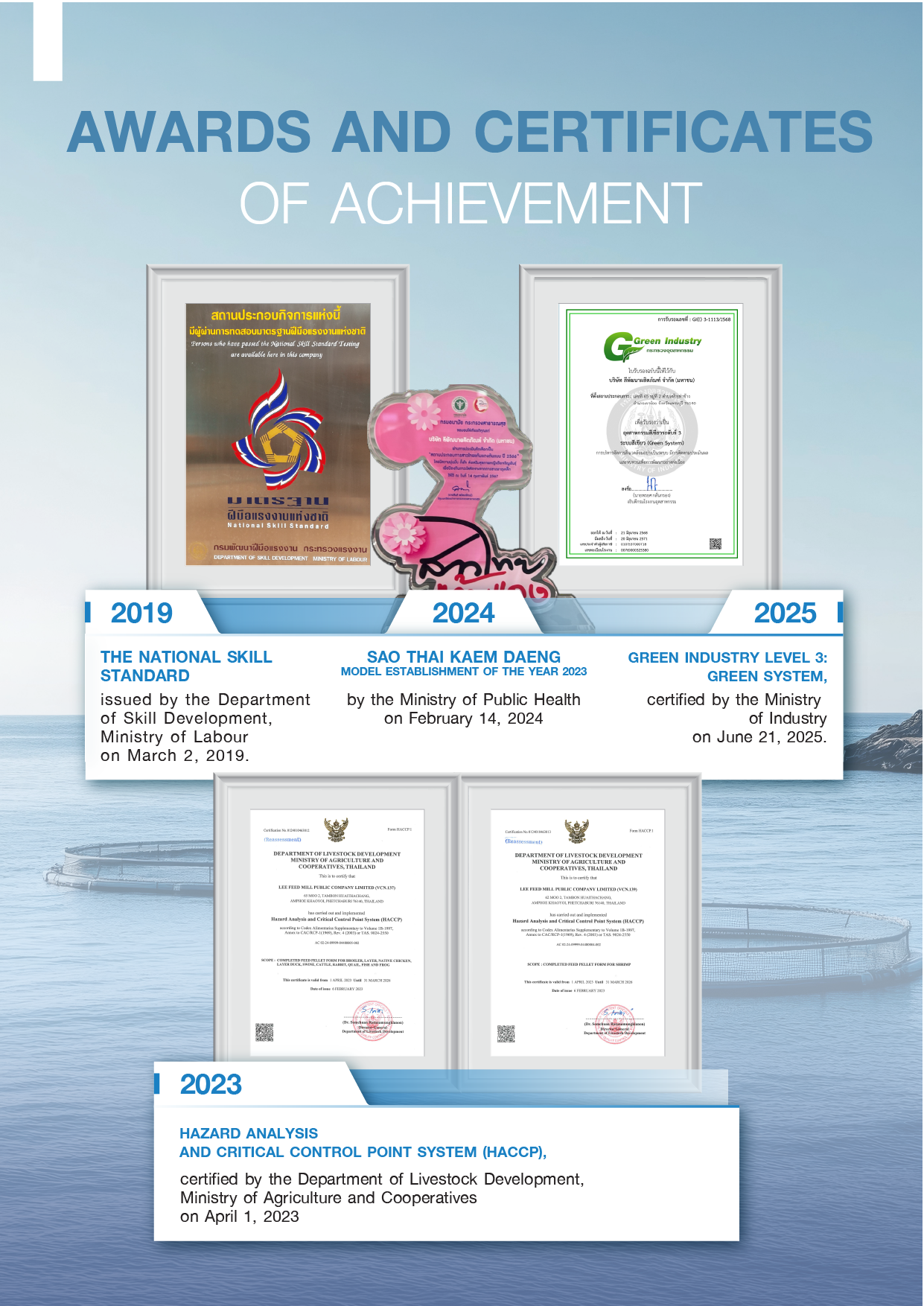
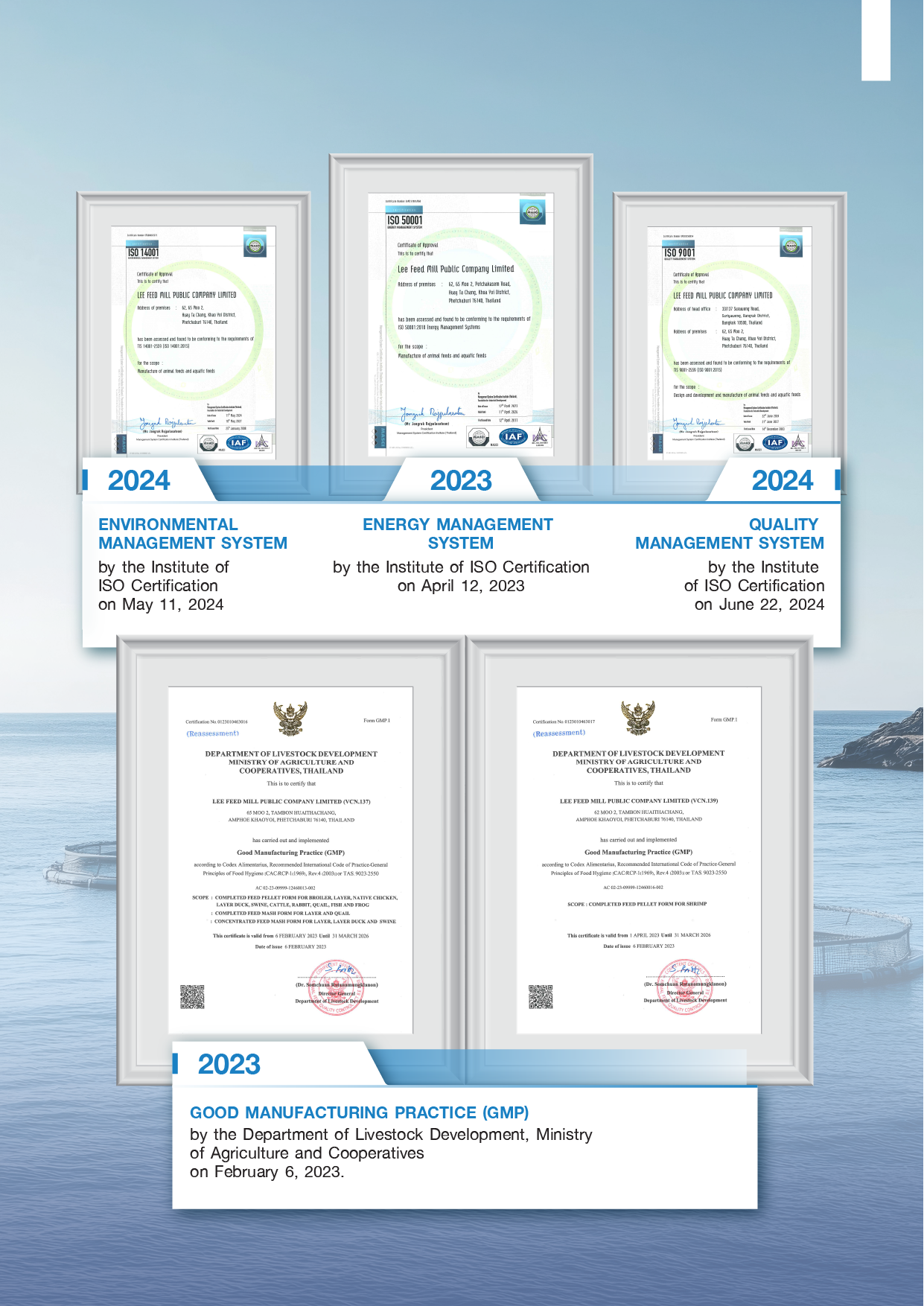
| Awards and Certificates of Achievement |
|
Material Changes & Developments
Material Changes & Developments
| Year | Description |
|---|---|
| 1,983 | Lee Feed Mill Co., Ltd. ("the Company") was established and Its first feed mill was located in Muang District, Nakhon Pathom. |
| 1,990 | The Company was listed on the Stock Exchange of Thailand. |
| 1,994 | • The Company transformed into a public company limited • The Company expanded its parent stock-chicken farm and chick hatchery for the production of broiler chicks for the market. Investment promotion was also granted to the hatchery, located in Chon Dan District, Phetchabun. |
| 1,988 | The second feed mill were built in Muang District, Saraburi, under Lee Pattana Feed Mill Co., Ltd. |
| 2,004 | • Due to the avian influenza crisis, the Company has ceased operation of the broiler hatchery and has shifted to operating wooden breeding instead. • Lee Pattana Agro Silo Co.,Ltd. has established to engage in the business of grain drying silos and the sale of animal feed ingredients. |
| 1,996 | • The first feed mill was closed. • The Company was granted the promotional privileges from the Board of Investment for the new feed mill in Kao Yoi District, Phetchaburi. |
| 2,002 | An additional aquaculture feed mill was established at the same location as the feed mill in Phetchaburi, with the granted promotional privileges from the Board of Investment. |
| 2,007 | An additional aquaculture feed mill was established at the same location as the feed mill in Saraburi, with the granted promotional privileges from the Board of Investment. |
| 2,012 | The Company has invested in Bodhi Ngarm Sea Farms Co.,Ltd which operates in the research and development of aquatic animal feed, to maintain and continuously improve the high quality and standards to be sustainable. |
| 2,020 | The Company invested in P A F (2020) Co., Ltd., a subsidiary, operates its business as a distributing pet feed. (Formerly known as “Pattana Agro Future Co., Ltd.”, an associated company) |
| 2,019 | The Phetchaburi and Saraburi factories had been granted the promotional privileges from the Board of Investment for improving production efficiency. This includes an investment in automated machinery worth a total of 277 million Baht. |
| 2,024 |
|
| 2,023 | The Company had established a Treasury Stock program for financial management purposes, with a maximum budget not exceeding Baht 240 million. The number of shares to be repurchased was set at no more than 90 million shares (with a par value of Baht 1 per share), representing up to 9.76% of the total issued and paid-up shares. The share repurchase period was scheduled from March 2, 2023, to September 1, 2023. |
| 2,025 |
|
Use of Proceeds from Securities Offerings
Is There Money Raised from a Securities Offering Still to Report On?
No
Commitments Made in the Registration Statement
Are There Commitments or Conditions from an Offering or Listing?
No
Group Operating-Structure Policy
Description
Lee Pattana Group operates its business principal activities are (1) the manufacturer of animal feed (2) crop drying, silo (3) experimental farming and (4) crop farming. Substantially all sales, operating profits and assets are related to the manufacture of animal feed business.
Lee Feed Mill Public Co., Ltd., the parent company, involved in processing the production and distribution of animal feed for both livestock and aquaculture in concentrated pellet and powder forms, as well as concentrated feed for swine, chickens, ducks, cattle, fish, and shrimp, under the trade mark of “Lee” “Win” “Max” and “Pro-grade”. The Company’s factory is located in Phetchabun province. The Company also run business in animal farm in Kaengkoy district, Saraburi province, breeding broiler chicks which breeder farm and hatchery chicks are located in Phetchabun province. However, the Company temporary ceased operation since October 1, 2004 due to avian influenza crisis. Currently, In Phetchabun, the Company operates the wooden breeding.
Lee Pattana Feed Mill Co., Ltd., a subsidiary, conducting a business along the lines of that of the parent company. However, this subsidiary concentrates on feed production for livestock and domestic animals, such as swine, chickens, ducks, cattle under the trademark of “Lee” “Win” “Max” and “Pro-grade”, Moreover, the Company produces pet food, “Petto” and “Jato” for dogs, “Mao Mao” and “Mao Mao One” for cats, “Naksu” for fighting cocks. Its mill is located in Saraburi Province.
Lee Pattana Agro Silo Co., Ltd., a subsidiary, with in silo grain storage and the purchase and sale of animal feed material to associated companies within the intercompany group.
Bodhi Ngarm Sea Farm Co.,Ltd., a subsidiary, operates its business as a rental farming.
P A F (2020) Co., Ltd., a subsidiary, operates its business as a distributing pet feed.
Companies Where the Company Holds ≥10%
Companies (≥10% Holding)
| Company Name | Address | Province | Zip Code | Telephone | Business Type | Security Type | Shares | Paid-up Shares |
|---|---|---|---|---|---|---|---|---|
| Lee Pattana Feed Mill Co.,Ltd. | 33/137 Surawong Road, Bangrak | Bangkok | 10500 | 0-2632-7300 | Producing and distributing animal feed | Common shares | 20,000,000 | 20,000,000 |
| Lee Pattana Agro Silo Co., Ltd. | 33/137 Surawong Road, Bangrak | Bangkok | 10500 | 0-2632-7300 | Crop drying | Common shares | 3,750,000 | 3,750,000 |
| Bodhi Ngarm Sea Farm Co.,Ltd. | 33/137 Surawong Road, Bangrak | Bangkok | 10500 | 0-2632-7300 | Rental farming | Common shares | 50,000 | 50,000 |
| P A F (2020) Co., Ltd. | 33/137 Surawong Road, Bangrak | Bangkok | 10500 | 0-2632-7300 | Distributing pet food | Common shares | 2,500,000 | 2,500,000 |
Income Structure
Introduction
The animal feed manufacturing plants of the Lee Pattana Group are divided into regional sales areas across the country in order to reduce transportation costs. The Phetchaburi plant focuses on sales in Nakhon Pathom, Ratchaburi, and all provinces in the southern region, starting from Phetchaburi downwards.; while the Saraburi plant serves sales in the central, northern, northeastern, and eastern regions.
Animal feed sales accounted for 99 percent of the Group's revenue, with livestock and crop farming accounting for the remaining 1 percent.
Product / Service Income
| Category | Description | This Year | This Year % | Last Year | Last Year % | 2 Years Ago | 2 Years Ago % |
|---|---|---|---|---|---|---|---|
| Total revenue from operations | Total revenue from operations | 2,928,923.22 | 100 | 2,833,173.2 | 100 | 2,924,571.96 | 100 |
| Animal feed | 2,898,301.15 | 98.95 | 2,805,682.76 | 99.03 | 2,899,117.63 | 99.13 | |
| Livestock and crop farming | 30,622.07 | 1.05 | 27,490.44 | 0.97 | 25,454.33 | 0.87 | |
| Other | Others | 0 | 0 | 0 | 0 | 0 | 0 |
Export Income
| Category | Description | This Year | This Year % | Last Year | Last Year % | 2 Years Ago | 2 Years Ago % |
|---|---|---|---|---|---|---|---|
| Total revenue | Total revenue | 2,928,923.22 | 100 | 2,833,173.2 | 100 | 2,924,571.96 | 100 |
| Domestic | Domestic | 2,927,007.2 | 99.93 | 2,828,609.42 | 99.84 | 2,916,430.85 | 99.72 |
| International | International | 1,916.02 | 0.07 | 4,563.78 | 0.16 | 8,141.11 | 0.28 |
| Cambodia | Cambodia | 1,916.02 | 100 | 4,563.78 | 100 | 8,141.11 | 100 |
| Other countries | Others | 0 | 0 | 0 | 0 | 0 | 0 |
Other Income
| Operating Other Income | Non-Operating Other Income | Share of Profit |
|---|---|---|
| 1710 · As of year: 26875.03 · Description: Total other income · As of yesteryear: 51436.8 · As of year before yesteryear: 68356.01 · 1711 · As of year: 0.0 · Description: Other income from operations · As of yesteryear: 0.0 · As of year before yesteryear: 0.0 | 1712 · As of year: 26875.03 · Description: Other income not from operations · As of yesteryear: 51436.8 · As of year before yesteryear: 68356.01 · 3825.25 · Description: Dividend income · As of yesteryear: 13691.25 · As of year before yesteryear: 23576.83 · -3424.25 · Description: Gain (Loss) on changes in value of financial assets at fair value through profit or loss · As of yesteryear: 11057.69 · As of year before yesteryear: 12066.61 · 7155.81 · Description: Others · As of yesteryear: 7371.65 · As of year before yesteryear: 17762.28 · 19318.22 · Description: Finance income · As of yesteryear: 19316.21 · As of year before yesteryear: 14950.29 | 1713 · Description: Share of profit |
Product / Service Characteristics
Business Type
3114
Business Groups
| Business Group | Description |
|---|---|
| 1. Animal Feed 2. Roasted Corn and Soybean Crops 3. Livestock | Types of Products The products domestically distributed under the Group’s portfolio can be classified by types as follows: 1. Animal Feed, available in granules, powder forms and animal feed concentrates. This category is further divided as follows: • Animal feeds for swine, poultry, ducks, quails, dairy cattle, etc., distributed under trademarks Lee, Win, Max, and Pro-Grade; • Aquaculture feeds for fish, shrimps, frogs, etc., distributed under trademarks Lee, Win, Max, and Pro-Grade. • Pet food for dogs, distributed under trademarks Petto and Jato; for cats, distributed under trademark Mao Mao and Mao Mao One; and for fighting cocks, distributed under trademark Naksu. 2. Roasted corn and soybean crops distributed as feed ingredients. 3. Animal breeds as by-products from the Company's animal farming business. Animal breeds are for the purpose of research on and improvement of quality of Company’s animal feeds to ensure they are accepted by livestock farmers in general with no focus on commercial benefits. Quality Standards and Certifications The Group focuses on the continuous development of product quality and standards. Additionally, there is an ongoing effort to improve and enhance the manufacturing processes to meet international standards. The Group has been certified by governmental and regulatory agencies for our quality management and good practices, as detailed below: 1. Lee Feed Mill Public Company Limited
2. Lee Pattana Feed Mill Co., Ltd.
3. Lee Pattana Agro Silo Co., Ltd.
Investment Promotion Privileges The Group has received tax privileges in accordance with the Investment Promotion Act from the Board of Investment of Thailand. Details of the Group’s investment promotion certificates that are still effective are as follows: 1. Lee Feed Mill Public Company Limited (Phetchaburi plant)
1) Exemption of import duty on machinery as approved by the Board of Investment. 2) Exemption of corporate income tax on net profits derived from BOI-promoted businesses in the proportion of 100% of investments in automation or robotics. This exemption has a period of 3 years from the date on which income is generated after receiving the certificate of promotion. The tax exemption value is estimated to be no more than 145 million Baht for investments in the automation system. 3) Deduct the annual loss incurred during the corporate income tax exemption period from the net profit incurred after the corporate income tax exemption period for not exceeding 5 years after the expiration of such period. It can be deducted from the net profit of any of the years or several years. 4) Exempt from including dividends generated by BOI-promoted businesses exempt from corporate income tax in the calculation of income tax throughout the promotion period.
Privileges: 1) Exemption from import duties for machinery as approved by the Board of Investment (BOI). 2) Exemption of corporate income tax on net profits derived from BOI-promoted businesses in the proportion of 50% of investments in solar power generation system. This exemption has a period of 3 years from the date on which income is generated after receiving the certificate of promotion. The tax exemption value is estimated to be no more than 25 million Baht for investments in the solar power generation system. 3) Deduct the annual loss incurred during the corporate income tax exemption period from the net profit incurred after the corporate income tax exemption period for not exceeding 5 years after the expiration of such period. It can be deducted from the net profit of any of the years or several years. 4) Exempt from including dividends generated by BOI-promoted businesses exempt from corporate income tax in the calculation of income tax throughout the promotion period. 2. Lee Pattana Feed Mill Co., Ltd. (Saraburi plant)
Privileges: 1) Exemption of import duty on machinery as approved by the Board of Investment. 2) Exemption of corporate income tax on net profits derived from BOI-promoted businesses in the proportion of 100% of investments in automation or robotics. This exemption has a period of 3 years from the date on which income is generated after receiving the certificate of promotion. The tax exemption value is estimated to be no more than 108 million Baht for investments in the automation system. 3) Deduct the annual loss incurred during the corporate income tax exemption period from the net profit incurred after the corporate income tax exemption period for not exceeding 5 years after the expiration of such period. It can be deducted from the net profit of any of the years or several years. 4) Exempt from including dividends generated by BOI-promoted businesses exempt from corporate income tax in the calculation of income tax throughout the promotion period.
Privileges: 1) Exemption from import duties for machinery as approved by the Board of Investment (BOI). 2) Exemption of corporate income tax on net profits derived from BOI-promoted businesses in the proportion of 50% of investments in solar power generation system. This exemption has a period of 3 years from the date on which income is generated after receiving the certificate of promotion. The tax exemption value is estimated to be no more than 25 million Baht for investments in the solar power generation system. 3) Deduct the annual loss incurred during the corporate income tax exemption period from the net profit incurred after the corporate income tax exemption period for not exceeding 5 years after the expiration of such period. It can be deducted from the net profit of any of the years or several years. 4) Exempt from including dividends generated by BOI-promoted businesses exempt from corporate income tax in the calculation of income tax throughout the promotion period. The automation system project at the Phetchaburi plant was completed in early 2023, while the installation at the Saraburi plant was completed in early 2024. Regarding the solar power generation system installed on the rooftops, the installation at the Phetchaburi plant was completed in December 2024, while the installation at the Saraburi plant was completed in February 2025. |
Research & Development
Has R&D Policy (Y/N)
Yes
R&D Cost — Description
Lee Pattana Group has an in-house Research and Development (R&D) division within its farm operations, dedicated to research, experimentation, and quality enhancement of animal feed. This ensures that the Group’s products effectively meet the needs of customers across all product segments.
• Livestock feed : research and development activities are conducted at Kaeng Khoi Farm in Saraburi Province.
• Aquaculture feed : research and development take place at the aquatic animal experimental farm in Chanthaburi Province.
These research facilities play a crucial role in advancing product quality and fostering innovation to support sustainable growth and maximize customer satisfaction.
R&D Cost — Label
Research and development (R&D) expenses over the past 3 years (Million Baht)
R&D Cost — This Year
11.69
R&D Cost — Last Year
11.6
R&D Cost — 2 Years Ago
11.49
Assets Used in the Business
Permanent Assets — Description
Significant characteristics of the Group’s fixed assets for business undertaking
Most of the fixed assets used in the business operation are owned by the Company and its subsidiaries, except the headquarter located at the 1st, 20th, 28th and 29th floors of the Wall Street Tower Building, Surawong Road, Bangrak, Bangkok. The Group has signed lease agreements with the parties which have any conflicts of interest. As of December 31, 2025, the Group's fixed assets have been utilized in business operations.
Permanent Assets — Appraisal
| Asset | Ownership | Obligation | Appraisal Value | Description |
|---|---|---|---|---|
| Land and land improvements – Feed Mill | Owner | None | 287,014,699.98 | - Total land area: approximately 241 rai
- Book value: approximately 63 million Baht
- Appraised by Siam Appraisal and Service Co., Ltd. in 2021
using the Market Approach method |
| Land and land improvements – Farm Project | Owner | None | 221,428,013.1 | - Total land area: approximately 1,489 rai
- Book value: approximately 42 million Baht
- Appraised by Siam Appraisal and Service Co., Ltd. in 2021
using the Market Approach method |
| Buildings and Buildings Improvement – Feed Mill | Owner | None | 76,659,924.73 | |
| Buildings and Buildings Improvement – Farm Project | Owner | None | 19,560,741.54 | |
| Machinery and vehicles – Feed Mill | Owner | None | 367,767,348.8 | |
| Machinery and vehicles – Farm Project | Owner | None | 822,912.37 | |
| Land and land improvements – Distribution Center | Rented from an external party | None | 351,007.36 | Right-of-use assets are those that the Company does not have ownership |
| Building and Building Improvement – Headquarter | Rented from a Party that may be in conflict | None | 30,230,891.04 | Right-of-use assets are those that the Company does not have ownership |
Intangible Assets — Description
As of 31 December 2028, the Group’s only significant intangible asset is computer software, which is utilized to support business operations and enhance operational processes.
Intangible Assets — Appraisal
| Asset | Type | Appraisal Value |
|---|---|---|
| Computer Software | Software | 3,602,367.41 |
Has Subsidiaries Investment Policy (Y/N)
Yes
Subsidiaries Investment Policy — Description
Currently, the Company does not have a policy for investing in additional subsidiaries. However, if there is a business with good returns in the future, the Company shall consider the investment by taking into account the adequacy of cash, conditions, and the rate of return on investment on a case-by-case basis and shall present a plan to the Board of Directors for consideration and approval of the said investment. However, in terms of management, the Company shall delegate its directors as representatives of the Company to participate in the management team of the subsidiaries based on the proportion of investment held by the Company in order to participate in formulating important policies and monitoring business operations thereof.
Marketing Policy & Competition
Reporting Mode
3117
Marketing Policy (Overall)
Customers, Targeted Customers, and Distribution Channels
Our key customers and targeted customers include livestock farmers and distributors. The Group’s sales proportion is approximately 60% to farmers and 40% to distributors. Among the Group’s product lines, livestock feed accounts for the highest sales volume. The farmers in this segment typically operate large-scale, standardized farms with sufficient and consistent purchasing power. These customers purchase animal feed exclusively for their own use and do not engage in reselling. Distributors, on the other hand, have designated sales territories and the ability to establish and manage sub-dealers within their assigned areas. Some also set up external sales teams outside their physical stores. Sales agents have the strong financial capacity and a thorough understanding of sales conditions and distribution agreements. Product quality is very important to clients in this industry. Therefore, the Group focuses on manufacturing and supplying high-quality animal feed products to maximize benefits for farmers and ensure customer satisfaction. The Group also emphasizes maintaining strong relationships with both customers and distributors. Due to the Group’s strong reputation for product quality, it currently serves more than 500 customers, including both existing and new clients. In the past year, the top 10 key customers accounted for approximately 50% of total sales. For the year 2025, the Group has revenue from 1 major customers in amount totaling of 497 million Baht which is revenue from local customers.
Industry & Competition (Overall)
1. Competitive Strategy
As the Group has been in the business for over 43 years, it is widely recognized and accepted in the market by customers. Through research and development of raw materials to improve the quality of feed formulas, the Group differentiates its products based on customer orders (Customized products), which sets it apart from competitors. If market demand for animal feed increases, the Group also has the production capacity to support large-scale production (Mass Production). Additionally, the Group builds strong relationships with customers through academic seminars and sales target reward programs. The Group also manages raw material storage to mitigate issues arising from raw material price fluctuations. Moreover, the Group conducts research to source alternative raw materials that do not compromise product quality when certain raw materials become expensive due to shortages.
2. Pricing Policy
Animal feed is subject to price controls by the Department of Internal Trade, Ministry of Commerce, whereby ceiling prices have been prescribed. Producers may adjust actual selling prices in accordance with production costs and other competitive costs, such as sales promotions, but not to higher than the ceiling prices. The Group can offer competitive pricing to customers by efficiently managing raw material costs, including procurement and seasonal storage of key raw materials, such as soybean meal, fish meal, and corn. Additionally, the Group researches and sources substitute raw materials that maintain nutritional quality during periods when certain raw materials may be expensive due to shortages.
3. Market Competition
Competition in the animal feed industry is divided into two major markets:
1. Free Market – This refers to selling animal feed directly to customers who either use it themselves or resell it to livestock farmers.
2. Contract Farming Market – This involves selling animal feed to customers participating in livestock farming programs, with a guaranteed selling price for live animals provided to farmers. Customers in this market must own their own farms. In addition to animal feed, they also supply livestock, such as piglets and chicks, to farmers, as well as provide modern farm management services for program participants.
The overall animal-feed industry offers profits and average growth rates at moderate levels and faces demand fluctuations in certain years, hinging mostly on export. Nevertheless, the industry experiences less fluctuation compared with other processed agricultural products, since sales are limited only within the country and free from fierce international competition.
According to the Association of Thai Animal-Feed Producers, there are 52 members animal-feed factories, representing 90 percent of the market. Medium and large-scale factories focus on production of pig, chicken, and aquatic animal feeds, while small-scale factories are more specialized. The small market size results in fierce competition; large-scale producers benefit from economies of scale with supplies to their own farms and member farms.
Most sales of the Group are made in independent local markets in Thailand. The total animal-feed demand is approximately 21.30 million tons per year, with factories supplying 80 percent of the supply and farmers supplying the remaining 20 percent. Supplies from animal-feed factories goes to independent markets at the rate of 45 percent, and to integrated business lines at the rate of 55 percent. Our share in independent markets is likely in the top ten independent markets (projected by our management and only for land and aquatic animal feeds).
Competition between integrated agribusinesses and companies focusing solely on animal feed involves both advantages and disadvantages. For example, if an integrated business faces challenges such as declining livestock prices or farming difficulties, it may struggle to sell its livestock products. However, when livestock prices and farming conditions are favorable, integrated businesses can achieve significant sales growth in both direct and related businesses. On the other hand, a company focusing solely on animal feed can adapt to market conditions. For instance, if a particular type of feed becomes more profitable and in higher demand, the company can shift its focus to that product to reduce business risks. However, if the overall agriculture industry thrives, non-integrated businesses may experience slower growth compared to integrated agribusinesses.
Looking ahead, the trend of agribusinesses transitioning to integrated farming models remains limited. Based on the Group's management assessment, only a few companies are likely to shift towards integrated agribusiness, as such a transition requires large-scale operations and substantial capital investment. Since most agricultural businesses in Thailand are small to medium-sized enterprises, this presents a significant limitation for expanding into integrated agribusiness models.
4. Industry Conditions and Product Trends
Comparison of Animal Feed Consumption Volumes in Thailand (2025 and 2026)
Type of Animal Feed | Animal Feed Consumption | |||||
2025 | 2026 | Increase (Decrease) | ||||
Volume (tons) | % | Volume (tons) | % | Volume (tons) | % | |
Broiler chicken feed | 8,473,196.00 | 38.79 | 8,473,196.00 | 38.41 | - | - |
Parent chicken stock | 957,600.00 | 4.38 | 957,600.00 | 4.34 | - | - |
Layer chicken (small) | 605,284.00 | 2.77 | 605,284.00 | 2.74 | - | - |
Layer chicken (egg) | 2,278,074.00 | 10.43 | 2,278,074.00 | 10.33 | - | - |
Parent layer-chicken stock | 17,072.00 | 0.08 | 17,072.00 | 0.08 | - | - |
Swine | 5,302,777.00 | 24.28 | 5,620,943.00 | 25.48 | 318,166.00 | 6.00 |
Swine breeder | 1,000,000.00 | 4.58 | 1,060,000.00 | 4.81 | 60,000.00 | 6.00 |
Duck feed | 317,400.00 | 1.45 | 286,915.00 | 1.30 | (30,485.00) | (9.60) |
Duck breeder | 25,389.00 | 0.12 | 22,951.00 | 0.10 | (2,438.00) | (9.60) |
Layer duck | 251,850.00 | 1.15 | 227,760.00 | 1.04 | (24,090.00) | (9.57) |
Dairy | 979,790.00 | 4.49 | 941,700.00 | 4.27 | (38,090.00) | (3.89) |
Cattle | 540,542.00 | 2.47 | 522,828.00 | 2.37 | (17,714.00) | (3.28) |
Shrimp | 528,000.00 | 2.42 | 496,000.00 | 2.25 | (32,000.00) | (6.06) |
Fish | 564,750.00 | 2.59 | 547,500.00 | 2.48 | (17,250.00) | (3.05) |
Total | 21,841,724.00 | 100.00 | 22,057,823.00 | 100.00 | 216,099.00 | 0.99 |
Source: The Thai Feed Mill Association
Thailand’s agricultural economy in 2025 expanded by 3.3% compared with 2024. Growth was recorded in the crop, livestock and forestry, and agricultural services sectors, while the fisheries sector contracted. The expansion was largely attributed to adequate and consistent rainfall throughout the year, unlike in previous years. Reservoirs, dams, and natural water sources maintained sufficient water levels to support agricultural activities, enabling farmers to expand cultivation areas. Although flooding occurred in several regions during the year, the impact on agricultural land was relatively limited, resulting in minimal damage. Thailand’s overall economy continued to grow, supported by government economic stimulus measures that boosted domestic consumption. At the same time, both farmers and government agencies increasingly adopted modern technologies and innovations in agricultural management, further enhancing productivity and efficiency of agriculture in 2025. Despite these positive factors, several downside risks remain. These include flooding in certain areas, rising trade barriers such as increased tariffs imposed by the United States, geopolitical conflicts in various regions, including tensions between Thailand and Cambodia, and the appreciation of the Thai baht, which has reduced the export competitiveness of Thai agricultural products.
Positive Outlook for 2026 Rainfall is projected to be sufficient for crop, livestock, and fisheries production, as continuous rainfall in late 2025 has resulted in adequate water storage in dams and reservoirs. This will ensure sufficient water supply for agricultural production during the dry season and extend into subsequent production cycles. Adequate water availability will also support livestock farming and aquaculture, promoting healthy growth and improving overall production efficiency across crops, livestock, and fisheries. Thailand’s tourism sector is also expected to continue expanding in 2026. In 2024, Thailand ranked among the world’s top destinations in terms of tourist arrivals. This positive trend is anticipated to stimulate economic activities and increase domestic consumption. Global demand for agricultural commodities is projected to rise due to ongoing geopolitical conflicts in several regions, which have disrupted transportation systems and affected livelihoods worldwide. As a result, many countries have become more aware of their food security and have begun increasing reserves of food products and feed ingredients for both human and animal consumption. As one of the world’s key food-producing countries, Thailand stands to benefit from this trend, with opportunities to expand production in crops, fisheries, and livestock to meet growing global demand. In addition, the Thai government continues to enhance agricultural production capacity and management under a market-driven approach. Key initiatives include promoting the adoption of technology and innovation in production and processing, upgrading agricultural product standards, implementing integrated water management systems, improving logistics infrastructure, and strengthening agricultural insurance and risk management systems to enhance resilience against potential uncertainties.
Negative Outlook for 2026 The primary downside risk in 2026 is climate variability, with a high likelihood of storms and flooding, particularly during the early and late parts of the year. The global economy also shows signs of slowing down, especially among Thailand’s key trading partners such as China, Japan, the European Union, and ASEAN countries. Ongoing geopolitical conflicts in various regions may disrupt the transportation of raw materials and energy supplies, increasing overall food production costs and weakening the competitiveness of Thai products. In addition, stricter trade regulations and protectionist measures are expected to pose further challenges to Thai agricultural exports and international competitiveness.
Fisheries Sector In 2025, the fisheries sector contracted by approximately 1.0% due to climate variability. Excessive rainfall in many areas and rapid temperature fluctuations created challenges for aquaculture. Shrimp experienced slower growth rates and sudden mortality, leading to reduced overall production. A new disease outbreak in snakeskin gourami, believed to be virus-related, caused severe losses for many farmers. Tilapia and catfish farming also faced shortages of high-quality fingerlings, as unpredictable weather conditions reduced hatchery output. Key production inputs, including feed, fuel, and electricity, remained at high price levels, keeping farmers’ costs elevated. With lower yields and high expenses, many farmers incurred losses, prompting some to cease or temporarily suspend farming operations while waiting for improved market conditions. This situation led to reduced feed demand.
Shrimp Thailand’s total shrimp production in 2025 was approximately 270,000 tons, similar to 2024 levels. At the beginning of the year, unstable weather conditions and heavy rainfall caused temperature fluctuations, leading to shrimp mortality and outbreaks of diseases such as Early Mortality Syndrome (EMS) and White Feces Syndrome. Many farmers rushed to harvest shrimp early to minimize losses, resulting in smaller-sized shrimp with lower market prices. Toward the end of the year, flooding in several southern provinces caused further shrimp losses and damaged farming equipment, including motors and aerators. Shrimp exports also declined due to the global economic slowdown, which weakened demand in Thailand’s key export markets, including China, Japan, and the United States.
In 2026, shrimp production is expected to remain close to 2025 levels. The industry continues to face persistent disease outbreaks and a shortage of disease-resistant shrimp brood stock. Limited production volumes may affect export capacity, reducing Thailand’s competitiveness, especially as competing countries continue to achieve higher annual output levels. Rising energy costs are also impacting capture fisheries and fishmeal production, an essential raw material in shrimp feed, resulting in higher feed costs. In addition, potential trade barriers pose further challenges. For example, the United States may restrict imports from Thailand by citing the use of prohibited fishing gear. The continued appreciation of the Thai baht also presents an obstacle to export competitiveness. In 2026, farmers are expected to increasingly shift toward farming black tiger shrimp, which have strong potential for larger sizes to meet the growing demand from the tourism market, where larger shrimp are preferred.
Tilapia Thailand’s total tilapia production in 2025, including fish raised with commercial feed and self-mixed local feed, as well as cage culture in natural water sources and pond systems, was approximately 270,000 tons, similar to 2024 levels. In 2025, consumption began to return to normal levels. However, key production inputs, i.e., fish feed and energy, remained expensive. Improved consumption led to higher market prices for tilapia meat. The number of farmers declined compared to the previous year due to accumulated financial losses, although those who continued farming began to see profits as fish prices improved. Some areas experienced damage during the second half of 2025 due to heavy rainfall, flooding, and oxygen depletion during sudden water changes, resulting in fish mortality. These impacts prevented overall production growth in 2025.
For 2026, tilapia production is expected to increase. Water availability is projected to be sufficient in many regions, and aquatic disease-related mortality should decline due to improved water conditions. The number of farmers may remain lower, and stocking densities are likely to decrease. Thailand’s improving tourism environment is expected to stimulate travel and consumption. However, potential damage may still occur in the second half of the year due to storms and flooding caused by climate variability. Farmers are therefore advised to prepare and plan carefully to minimize potential losses. Additionally, rising average fish prices are expected to encourage more farmers to resume or expand tilapia farming.
Catfish Domestic catfish production in 2026 is projected at approximately 87,000 tons, increasing from 85,648 tons in 2025, equivalent to 1.5% growth. The increase is supported by a recovery in consumption and improving purchasing power. More farmers are resuming stocking as farm-gate fish prices have risen. However, some farmers continue to use lower-quality, lower-cost feed due to limited access to financing. This may result in slower average growth rates, keeping the overall production increase modest. Additionally, domestic tourism is expected to improve, which should stimulate higher consumption among Thai travelers.
Livestock Sector In 2026, the livestock sector is forecast to expand by 1.0-2.0% compared with 2025. Growth is driven by rising consumption demand, supported by the continued recovery of the tourism sector. Effective disease control in swine, beef cattle, and dairy cattle has strengthened confidence among trading partners in Thailand’s standardized livestock production systems, creating additional market opportunities. However, negative factors remain, including trade protection measures, particularly tariff barriers, and the appreciation of the Thai baht, which could reduce the price competitiveness of Thai livestock products.
Swine Thailand’s fattening pig production in 2026 is projected at approximately 22.39 million head, up from 21.13 million head in 2025, representing an increase of 5.9%. This growth is largely attributed to effective control of African Swine Fever (ASF) through strong collaboration between the public and private sectors. As a result, many farms have been able to manage disease risks and gradually increase production, although sporadic infections are still reported in some areas. Production costs remain high due to increased spending on disease prevention and enhanced biosecurity measures, as well as higher feed and veterinary costs. Although pork prices have risen for a period, providing some relief to farmers, there is still a risk of financial losses. An additional concern is the potential importation of lower-cost pork from the United States, which could put downward pressure on domestic pork prices, particularly affecting small- and medium-scale farmers. Furthermore, in 2026, Thailand’s declining population, resulting from lower birth rates, may lead to reduced overall domestic consumption. Therefore, market expansion will require support from other drivers to increase consumption, such as tourism growth, increased investment in biosecurity to support export markets, and greater emphasis on processing of livestock products.
Eggs For 2026, the import quota for layer breeding stock remains unchanged from 2021-2025 levels, with imports set at 3,800 Grandparent Stock (GP) and 440,000 Parent Stock (PS) birds. As of the end of 2024 (January-July 2024 data), Thailand had approximately 51.55 million laying hens in production, generating an estimated 42.78 million eggs per day. The average egg price in 2024 was around THB 3.60 per egg. Feed costs have gradually increased from 2025 levels due to import tariff issues and domestic corn price support measures. Farm management continues to emphasize strict biosecurity to ensure effective disease prevention, enabling production to remain close to planned targets. Weather conditions remain variable, with alternating hot and rainy periods that may affect productivity. However, water supply for farms is sufficient. The Egg Board continues to implement price stabilization measures to prevent oversupply. Cooperative measures include culling laying hens at appropriate ages, where large-scale farms must cull at no more than 78 weeks and general farms must cull at no more than 80 weeks. Exemptions apply to small-scale farmers raising fewer than 30,000 hens who are not under contract farming systems with large integrators, as well as farms operating under non-commercial or alternative production models.
Broiler Chickens In 2026, the Thai Feed Mill Association estimates broiler production at 2,021.76 million birds, with total chicken meat output projected at 3.47 million tons, representing a 0.9% increase from 3.44 million tons in 2025. Domestic consumption is expected to remain stable, as Thailand’s population shows a declining trend. Export growth is also anticipated to slow in line with economic conditions in key trading partners such as Japan. Exports in 2026 may face challenges due to reduced price competitiveness resulting from the appreciation of the Thai baht. In addition, China, another major export market, is expected to expand its domestic broiler production. Further challenges include U.S. tariff measures and non-tariff trade barriers imposed by the European Union. These factors are expected to present obstacles for Thailand’s broiler industry in 2026.
Dairy Cattle According to data and statistics from the Department of Livestock Development, Thailand’s dairy cattle population in 2025 is estimated at 560,551 head, down from 568,111 head in 2024, a decline of 1.33%. The decrease is mainly due to unfavorable raw milk prices and rising production costs, particularly for concentrated feed and commercial feed. In an effort to reduce expenses, many farmers reduced concentrate feeding, which subsequently affected both milk yield and milk quality, resulting in lower selling prices. Some farmers accumulated financial losses, and older farmers in particular decided to cease operations, leading to a decline in the number of lactating cows and overall milk production. During the second half of 2025, several dairy cooperatives experienced payment delays to farmers, influencing farmers’ feeding decisions. In addition, the “Free Trade Agreements (FTAs)” between Thailand and Australia and New Zealand, effective from January 1, 2025, defined import tariffs on milk and dairy products at 0%. Since these countries have lower production costs than Thailand, the agreements have put downward pressure on domestic raw milk prices.
Beef Cattle According to the Department of Livestock Development, Thailand’s beef cattle population in 2025 is estimated at 9.4 million head, down from 9.9 million head in 2024, a decrease of 5.2%. The decline is attributed to less attractive beef cattle prices. Most cattle are still raised under traditional free-grazing systems, while high-quality feedlot operations remain limited in number. Thailand imports more than 50,000 tons of high-quality beef annually, which the government views as an opportunity to promote the development of premium domestic beef production. Efforts are being made to encourage farmers to upgrade production standards and improve meat quality in order to substitute some imports and increase value-added output. Examples include well-known premium beef brands such as Phon Yang Kham beef, Korat Wagyu, and Lam Takhong Black cattle. For 2026, the beef cattle population is expected to increase, as relatively favorable cattle prices are likely to provide stronger incentives for farmers to expand production.
Growth rate of gross agricultural product
(Unit: Percentage)
Sector | 2025 | 2026 (Forecast) |
Agriculture | 3.3 | 2.0 - 3.0 |
Plant | 4.6 | 2.5 - 3.5 |
Livestock | 0.5 | 1.0 - 2.0 |
Fishery | -1.0 | 0.3 - 1.3 |
Agricultural service | 2.6 | 0.7 - 1.7 |
Forest | 1.3 | 0.2 - 1.2 |
Source: Division of Agricultural Development Policy and Planning, Office of Agricultural Economics (Estimated as of November 2025)
Information:
1. Documents of Agricultural Development Policy and Planning Division, Office of Agricultural Economics, Ministry of Agriculture and Cooperatives.
2. Documents of Bureau of Fisheries and Fisheries Development Strategy, Department of Fisheries.
Procurement of Products & Services
Reporting Mode
3117
Procurement (Overall)
Production Facilities and Capacity
The Group operates manufacturing plants and farms through its subsidiaries as follows:
1) Animal Feed Plant in Saraburi Province is located at 33/1, Moo 7, Phahonyothin Road, Dawrueng Subdistrict, Mueang District, Saraburi Province. The Company owns the land, covering approximately 136 rai. This site houses the feed production facilities of Lee Pattana Feed Mill Co., Ltd.
Plant 1 has an annual production capacity of approximately 120,000 tons of livestock feed and has been in operation since 1988.
Plant 2 has an annual production capacity of approximately 60,000 tons of aquaculture feed, with an investment of approximately 160 million Baht in plant construction and machinery procurement. This plant commenced operations on January 4, 2007.
Silo Facility of Lee Pattana Agro Silo Co., Ltd. can store up to 38,500 tons of corn and has been operational since August 3, 2005.
In 2019, the plant received investment promotion for the automation of its machinery, valued at 108 million Baht. The installation and system upgrades were completed, and full automation-based production commenced in January 2024.
In 2024, the company received additional investment promotion for the installation of a Solar Roof system to enhance production efficiency through renewable energy utilization, with a total investment of 51 million Baht. The installation is scheduled for completion in February 2025.
2) Animal Feed Plant in Phetchaburi Province is located in Huai Tha Chang Subdistrict, Khao Yoi District, Phetchaburi Province. The Company owns the land, which spans approximately 105 rai.
Plant 1 has an annual production capacity of 144,000 tons of livestock feed. The plant was constructed with an investment of approximately THB 231 million Baht and began operations on September 2, 1996.
Plant 2 (Aquaculture Feed Plant 1) has an annual production capacity of 48,000 tons, with an investment of approximately 145 million Baht. It commenced operations on July 24, 2002.
Plant 3 (Aquaculture Feed Plant 2) has an annual production capacity of 24,000 tons, with an investment of approximately 85 million Baht. It began operations on July 1, 2010.
In 2019, the plant received investment promotion for the automation of machinery, valued at 145 million Baht. The upgrades were completed, and full automation-based production started in January 2023.
In 2024, the company received further investment promotion for the installation of a Solar Roof system to enhance production efficiency through renewable energy utilization, with an investment of 51 million Baht. The installation was completed in December 2024.
3) Broiler Breeder Farm Project in Phetchabun Province is located in Dong Khui Subdistrict, Chon Daen District, Phetchabun Province. The Company owns the land, covering approximately 833 rai. This farm was established for broiler chick production with an investment of approximately 80 million Baht and began operations in 1994. However, operations have been temporarily suspended since 2004 due to the avian influenza outbreak. The site has since been repurposed into a plant breeding farm.
4) Lee Pattana Experimental Farm Project in Saraburi Province is located in Huai Haeng Subdistrict, Kaeng Khoi District, Saraburi Province. The Company owns the land, covering approximately 600 rai. The primary objective of this facility is to conduct animal husbandry trials for various economic animals, including broilers, ducks, quails, breeding pigs, and fattening pigs. The Animal Feed Technology Department oversees research methodologies and experimental procedures to analyze data for enhancing the quality of the company’s animal feed products. The farm has been in operation since 1993.
Raw Material Acquisition (Overall)
Since the return of President Donald Trump to office in early 2025, trade protectionist measures have been announced in the form of reciprocal tariffs imposed on multiple countries worldwide under the “America First” policy. This development has marked the beginning of a renewed trade war (Trade War 2.0), resulting in a slowdown in global trade and investment and affecting global supply chains as a whole. It has also contributed to heightened geopolitical tensions in the Middle East, Asia/the South China Sea, and the ongoing Russia-Ukraine conflict. Although the U.S. Federal Reserve (FED) reduced its policy interest rate from 5.25-5.50% in 2024 to 3.50-3.75% in 2025, supporting global GDP growth at approximately 3.2-3.3%, Thailand’s GDP growth is projected to expand at a relatively low rate of only 1.6-2.1%, below the average of ASEAN countries. The primary cause is the slowdown in exports in line with economic conditions of key trading partners such as the United States and China. Although the tourism sector and domestic consumption have provided partial support to the economy, they remain insufficient to fully offset external pressures.
In 2025, prices of key raw materials declined in several categories. For example, imported soybean meal prices decreased due to higher production volumes in major grain-producing and exporting countries. Among domestic raw materials, broken rice prices declined as major rice-exporting countries, particularly India, resumed normal rice exports. Feed corn prices also decreased, as farmers shifted cultivation areas from cassava to feed corn, resulting in increased supply. In the protein category, fishmeal prices declined during the first three quarters of the year due to reduced domestic aquaculture activity, which led to lower demand. However, prices increased in the fourth quarter in response to rising demand from international markets. Meanwhile, lower domestic fish catches affected the volume of fish supplied to the market.
Key factors affecting the global economy in 2026 continue to stem primarily from U.S. tariff policies, which are expected to slow global trade expansion. The World Trade Organization (WTO) projects global trade growth at only 0.5%, down from 2.4% in 2025. Monetary policy decisions by major central banks, including those of the United States, Europe, China, and Japan, particularly interest rate increases or reductions, are impacting public debt and household debt burdens, as well as contributing to exchange rate volatility. In addition, geopolitical tensions across various regions and conflicts among major powers, such as the Russia-Ukraine war, tensions between the United States and Iran, relations between the United States and the NATO and the European Union (EU), as well as political issues concerning Greenland, remain risk factors for global supply chain disruptions. These developments have contributed to continued volatility in oil and energy prices. Regarding international raw material prices in 2026, prices are expected to decline due to increased production of soybeans, soybean meal, and wheat, which will help expand global supply. Meanwhile, consumption by major buyers such as China may slow as a result of domestic economic challenges.
Domestically, feed corn prices in 2026 are expected to remain stable. Although cultivation areas and output have increased, the government has maintained price stabilization measures for the 2025/26 crop year. The support price for dried corn at 14.5% moisture content is set at THB 9.80 per kilogram at animal feed mills in Bangkok and surrounding areas, while fresh corn at 30% moisture content is set at THB 7.05 per kilogram from farmers in key production provinces such as Phetchabun, Kamphaeng Phet, and Uthai Thani, among others, to ensure price stability. Rice product prices are expected to decline due to India’s increased rice exports compared with the previous year, coupled with the appreciation of the Thai baht, which has reduced Thailand’s price competitiveness and export volume. Fishmeal prices, however, are expected to rise due to adverse weather conditions that have reduced fish catches, thereby limiting the supply of fresh fish entering the market. In response, the Company closely monitors and evaluates raw material price volatility and continuously adjusts its management strategies in line with market conditions to maintain animal feed quality standards under an efficient cost structure.
Production Policy (Overall)
The Group has a policy to customize products based on customer orders. This offers varieties in products and recipes. However, if there is a rising demand for animal feeds in the market, the Company shall still have the capacity to support mass production. The Company also has silos to store corn during the low season in order to ensure sufficient quantity of raw materials throughout the year as well as expanding warehouses for animal feed products to magnify storage space for goods and raw materials.
During the past 3 years, the Group's total production capacity and actual production volume can be summarized as follows:
Feed Manufacturing Plant | 2023 | 2024 | 2025 |
Full production capacity (Unit: tons) | 396,000 | 396,000 | 396,000 |
Actual production volume (Unit: tons) | 137,265 | 145,336 | 155,941 |
Capacity utilization (%) | 35 | 37 | 40 |
Animal feed production process
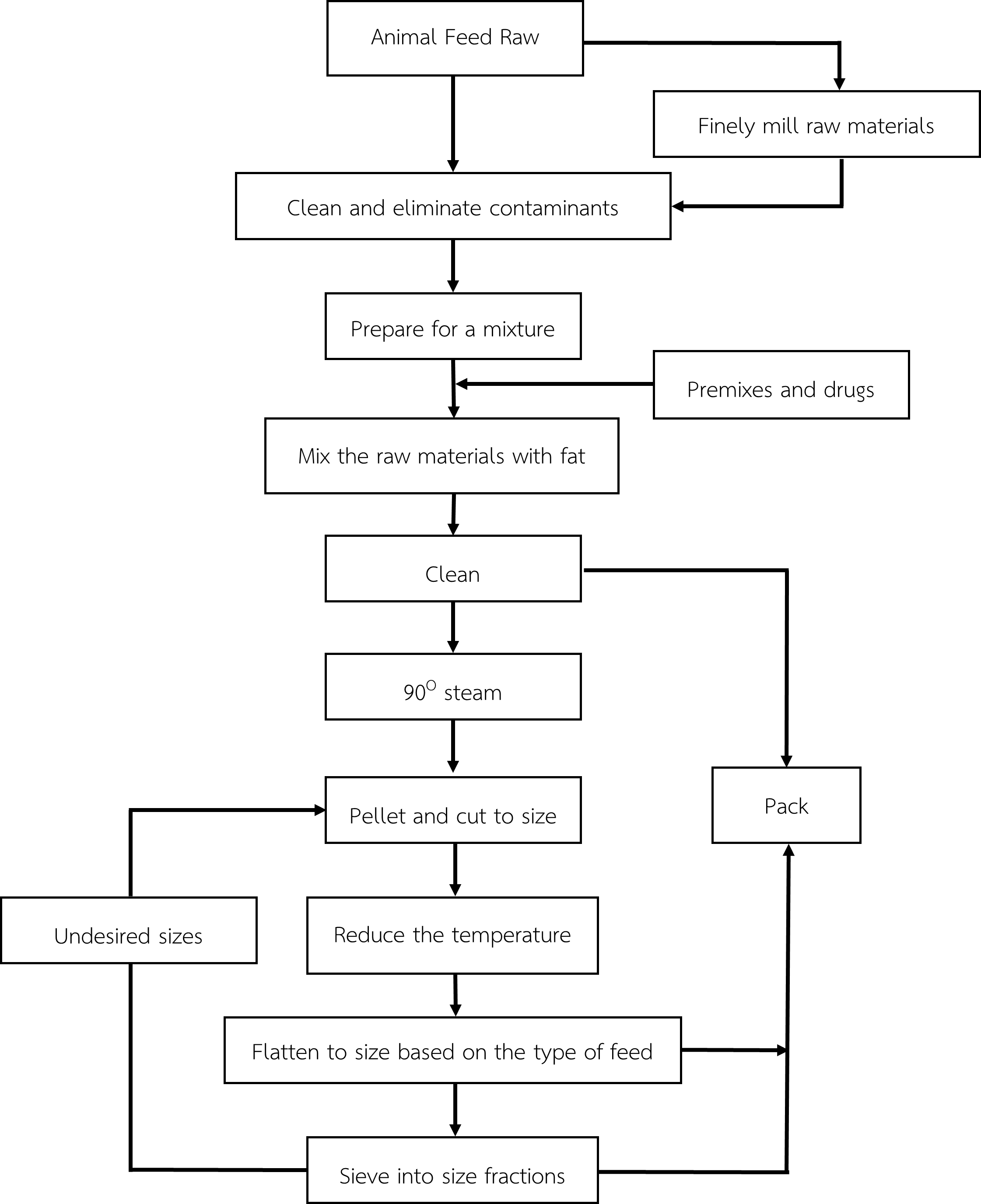
Note: For all produced feeds and those getting through to the packing process, if it is found that the feeds do not meet the required standards, they shall be rejected and restart at the production process.
Distributors (Overall)
The Group does not have any suppliers whose purchase value exceeds 10% of total procurement. This is due to the Group’s strategic approach to risk diversification, which mitigates reliance on any single supplier and ensures the stability of raw material sourcing. The Group’s procurement process involves market price benchmarking and supplier price comparisons to achieve optimal cost efficiency while maintaining the predefined quality standards.
Number of Raw-Material Distributors (Overall)
0
Production Capacity (Overall)
| Item | Unit | Used | Capacity |
|---|---|---|---|
| Feed Manufacturing Plant | Ton | 44 | 396,000 |
Domestic/Overseas Purchase Proportion (Overall)
| Raw Material | Source Country | Value |
|---|---|---|
| Soybean meal | Brazil | 393,144,261.27 |
| Rapeseed meal | India | 40,156,488.93 |
| DIstillers Dried Grain with Solubles (Feed Grade) (DDGS) | United States of America | 31,048,409.66 |
Projects Under Construction
Has Projects Under Construction (Y/N)
No
Debentures & Bills of Exchange
Has Debentures (Y/N)
No
Convertible Securities
Has Convertible Securities (Y/N)
No